7 Platinum Parenting Tips
/
Haim Ginott, famed psychologist came up with some fantastic parenting tips in the 1960’s. I’ve synthesized some of his work with my own ideas and added elucidation as follows.
Read MoreResolve behavior problems or reduce ADHD symptoms with the magic of Child-Centered Play Therapy!
Many parents experiencing problems with their children who are wondering “Am I a bad parent,” are feeling a lot of parenting guilt and tend to blame themselves for their child’s issues: “It must be my fault my child is misbehaving because I am a bad parent… there must be something wrong or bad about me…”
Many parents express great frustration regarding transitions for children. When a child is engaged in a fun activity, and it’s time to go or do something else, it seems like it’s almost impossible to get the child to stop playing and do what he needs to do!
17 Surprising parenting do’s and don’ts. It is amazing how much power we possess as parents to influence our children’s emotional health and well being by just tuning up the way we act with them a little bit.
The paths of teenage romance are littered with depression, disillusionment, abuse and mistreatment, lost innocence, unhealthy obsessions, distraction from school work and a healthy social life, horrible sexually transmitted disease, unwanted pregnancy, abortion, and worst of all heartbreak! Let’s examine the dangers of teenage sex and romance in detail.
Are you a parent struggling with your child’s anxiety? Have you noticed that your efforts to calm your child down, only make it worse? Are you at your wits’ end trying to help your child, and are really wondering, what causes anxiety disorders to develop in children in the first place?
A perfectionism disorder in the psychological sense occurs when an individual, because of certain childhood stressors, develops significant low self-esteem and a sense of shame regarding his very self.
There are a lot of people around nowadays who seem to have a great fear of being arrogant. Maybe they have been accused of being conceited or full of themselves. Maybe they are genuinely successful people, and they are concerned that their success will go to their heads and they will develop ugly, boastful character traits.
Many parents are extremely frustrated by what they feel is a lack of communication between themselves and their teen. With good reason, they are alarmed, because they intuitively know that if the teen keeps everything a secret from them, it will be quite difficult to effectively parent!
Many individuals seeking therapy report bitter jealousy regarding others. Sadly it prevents them from enjoying life and creates interpersonal conflict, and in some, it even causes great misery. They are left wondering, “Is jealousy damaging to your mental health?”
One amazing technique I have created is to be meticulous to cultivate a relaxed attitude in children that, “Everything is Ok just the way it is… I as a child am doing just fine… There is nothing wrong with me and nothing I need to improve or work on…Things are really no big deal!” What does this mean?
There are many individuals, both adults, teens and children, who struggle with perfectionistic tendencies, and they may wonder, “Is Perfectionism a mental disorder?” The answer is, sometimes no, but often yes!
Are you tired or those constant sibling squabbles? Does your parental intervention just make it worse? Do you feel your kids just crave unlimited attention? Are you running out of sibling rivalry solutions?
Many parents struggle with a child having anxiety about death. Maybe a grandparent has passed away, or maybe even a closer family member, and the child is worried it may happen to others he or she loves.
Many parents are extremely frustrated and exasperated by this issue, and are really struggling with what to do when your child lies. It is highly upsetting and demoralizing to never know when the youngster is telling the truth or not.
This is a case study of a real client who came to me in recent years. She has agreed to let me write about her case because she wants so much to help others so they should not suffer like she did! I am calling her Sarah and I have changed a few personal details to preserve her anonymity, but otherwise the story is 100 percent true to life.
There is a very popular concept going around the is pretty much universally accepted by most researchers, that when a child has a tantrum because he or she wants something, and you give in to the tantrum and give him what he wants, you behaviorally reinforce the tantrum, ensuring that he will have more tantrums in the future. The logic is that the child sees that having a tantrum gets him the reward he wants, so he is motivated to have more tantrums in the future as a way of getting what he wants. I actually agree that giving in can lead to more tantrums, at least in the short run and under certain conditions. But in discussing how to deal with temper tantrums, my point is you should still give in to them as best as you can anyway, and combined with some other strategies, you will in the long run actually eliminate tantrums! Let me explain…
Many parents today feel that their child’s academic success is the number one priority. They want their children to live happy, successful lives, and they feel that academic achievement is absolutely necessary to achieve that goal.
In order to learn how to prevent emotional and behavioral disorders in children, we need to understand that, contrary to popular belief, disorders such as anxiety, depression, ADHD, Oppositional Defiant Disorder and almost all others, are in my opinion and my clinical experience, NOT caused by genetics and biology! As has been demonstrated to me countless times, they occur when a child is born with a particularly sensitive temperament, and then experiences certain adverse childhood stressors, which because of his sensitive nature, are experienced as a trauma. The emotional disorder is the body and mind’s maladaptive attempt to cope with that trauma.
If I were to tell you that stuttering is genetic, or a hard-wired brain or speech defect, there would be nothing you could do to prevent it and little you could do to cure it, as you can’t change a child’s genetics or biology very much. But since I’m telling you that it is fueled by stressors in the environment, by changing the child’s environment through stuttering therapy for children including Play Therapy and Parenting Interventions, you can defuse what’s fueling the stuttering, and even allow it to be replaced with healthy speech habits which develop from the child’s newly earned emotional health!
We as parents possess tremendous power to influence our children for the good; by improving the way we relate to them, we can literally fashion and shape their very emotional health, which is the critical foundation upon which a life of success will be built.
Haim Ginott, famed psychologist came up with some fantastic parenting tips in the 1960’s. I’ve synthesized some of his work with my own ideas and added elucidation as follows.
Read MoreFamed psychologist of the 1960’s, Haim Ginott, came up with some amazing parenting ideas. I’ve synthesized his work with some of my own ideas and added explanation and advice, as follows.
Read MoreEvery parent has gone through a period where their child refuses to follow instructions. Children often misbehave or disobey because a want or need is not being met. When we, as parents, recognize why our children are being uncooperative, we can take steps to improve communication and compliance. The following parenting tips can help you address behavior challenges so you no longer have to think, “I don’t know how to get my child to obey.” Please bear in mind that the following principles represent a parenting ideal, and I don’t expect anyone to fulfill them perfectly. Therefore, have patience with yourself and try to implement new ideas gradually.
Read MoreWe all understand that a wise parent doesn’t put down his or her child verbally. Instead, many parenting guides will say to catch your child doing good and praise him. Lavishly extoll his virtues and qualities, his brains, beauty, and especially his good deeds. This, they say, is the way to build healthy self-esteem in a child. However, as we shall see, there are many difficulties with this approach.
Read MoreAlmost every parent has thought at some point, “I don’t know how to get my child to cooperate.” You may feel like you are at your wits’ end, unsure what else you can try to improve your child’s behavior and compliance. The following suggestions are based on the work of Adele Faber and Elaine Mazlish, renowned parenting experts, synthesized with my own ideas that come from my research, training and experience helping parents and children learn to communicate and cooperate. Please bear in mind that the principles I offer here represent a parenting ideal, and I don’t expect anyone to fulfil them perfectly. Have patience with yourself and your child, and try to implement new ideas gradually.
Read MoreIt’s probably not an exaggeration to describe young children as nearly helpless. They are completely dependent on their parents for all their physical and emotional needs. Most misbehavior is a misguided, desperate attempt to fulfill those needs. Therefore, we can learn how to stop a temper tantrum and other misbehavior by being careful and planning ahead to ensure we are fulfilling our children’s needs.
Read MoreHow did my child ever get to be so difficult to handle? Is it all my fault? Was he born so anxious, and I just have bad luck? Many parents struggle with understanding the rhyme and reason behind their child’s emotional issues.
Read MoreInfograph of the Anatomy of a Tantrum. Tantrums are fueled by a progressively spiraling lower HAPPINESS level.
Read MoreIt can be unhealthy or disruptive to allow your child to do whatever he or she wants whenever he or she wants. You have to limit his or her behavior for everyone’s safety and well-being. However, your child can and should be able to feel anything he or she needs or wants to feel. Feelings are involuntary and automatic. We cannot control them and they are not the result of choice. Therefore, we should not be held responsible for how we feel, even if it is uncomfortable to someone else. You must accept and validate your child’s feelings if you wish to foster greater emotional health and resiliency.
Read MoreIn their classic book “How To Talk So Kids Will Listen & Listen So Kids Will Talk”, Faber and Mazlish, international experts on parent-child communication, list five amazing techniques to deal with children’s difficult or oppositional behaviors and emotions. By describing, giving information, saying with one word, saying how you feel and writing notes, you can learn how to get your child to listen. In this post, I’ve synthesized Faber’s and Mazlish’s thoughts with my own ideas on how to gain a child’s cooperation and added elucidation. Please bear in mind that the following principles represent a parenting ideal, and I don’t expect anyone to fulfil them perfectly. Therefore, have patience with yourself and try to implement new ideas gradually.
Read MorePlease bear in mind that the following principles represent a parenting ideal, and I don’t expect anyone to fulfill them perfectly. Therefore have patience with yourself and try to implement new ideas gradually. With these tips, you can learn how to get your child to go to sleep or eat.
Read MoreThe following list will explore the top 10 things parents worry about, and why it’s okay to let go of those fears. Please bear in mind that the following principles represent a parenting ideal, and I don’t expect anyone to fulfill them perfectly. Therefore, have patience with yourself and try to implement new ideas gradually.
Read MoreDuring and after the separation, it is crucial to remember this point. Parents’ fighting severely traumatizes children. He fears that if Mommy and Daddy are going to abandon each other, then they will abandon him too. This is called an abandonment annihilation trauma. He further fears that if his parents are going to mistreat each other, they will mistreat him too. If you need to argue, put on the T.V. loudly and go behind closed doors. It’s hard to stick by this rule when passions flare up, but it pays to try your best.
Read MoreThe following education tips for parents will not only improve your child’s education, but will do wonders for his or her emotional health and your relationship as parents, two things that are arguably even more important that education. I have developed these tips based on my Montessori and teaching experience, clinical experience, advice from my mentors and experience educating my own four boys.
Read MoreThe name of the game with these items is balance. If they get too much it is unhealthy and corrupting. If they don’t get enough it is intolerable for them, they feel deprived, are miserable and tend to get obsessed with what they’re missing. You need to use great wisdom to figure out exactly how much each child needs.
Read MoreAre you struggling with a parenting challenge? Do you receive parenting advice from friends, family and other sources but question whether it is accurate or if it is really best for your child? The following parenting myths are based on my clinical and teaching experience, and my experience raising my own four boys, as well as research into the literature on parenting and the wise guidance of my mentors.
Read MoreIn many families, it can be extremely challenging figuring out how to get your child to brush their teeth. He or she may be getting cavities, the dentist is complaining, but your child simply does not want to brush. It has become a battle of wills and everyone is losing.
Read MoreThe following important tips for a new parent comes from my experience raising my own four boys, my clinical experience working with parents, research I’ve done on parenting infants, and the wise counsel of my mentors. Please be advised that this represents a parenting ideal, and I don’t expect anyone to fulfill it perfectly. Rather have patience with yourself and try to incorporate new ideas gradually.
Read MoreFocus, above all, on building the parent-child relationship. It is the foundation on which all your child’s well-being lies. You have the opportunity to create a reservoir of trust, mutual confidence, reason, explanation, negotiation, accommodation, consideration, unconditional love and approval. When misbehaviour or problems arise, you can draw on this reservoir and resolve the issues, and you will therefore not need punishment, force or other harsh tactics. Children are very eager to please parents when they enjoy this warm relationship.
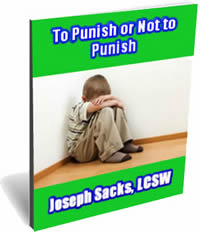
Read More“My parents used to hit me all the time and I turned out okay,” you may say. Maybe you’ve thought, “How am I going to teach him a lesson if I can’t hit him?” or “When I get angry, I can’t control myself and I just spank him. Then, although I have discharged my anger, I feel very guilty.” The truth is, clinical experience indicates that many parents hit their kids every once in a while. However, there are a number of concerning problems with adopting spanking as a planned method of discipline, which may leave you wondering: to spank or not to spank?
Read More

There are a lot of people around nowadays who seem to have a great fear of being arrogant. Maybe they have been accused of being conceited or full of themselves. Maybe they are genuinely successful people, and they are concerned that their success will go to their heads and they will develop ugly, boastful character traits.
Many individuals seeking therapy report bitter jealousy regarding others. Sadly it prevents them from enjoying life and creates interpersonal conflict, and in some, it even causes great misery. They are left wondering, “Is jealousy damaging to your mental health?”
There are many individuals, both adults, teens and children, who struggle with perfectionistic tendencies, and they may wonder, “Is Perfectionism a mental disorder?” The answer is, sometimes no, but often yes!
This is a case study of a real client who came to me in recent years. She has agreed to let me write about her case because she wants so much to help others so they should not suffer like she did! I am calling her Sarah and I have changed a few personal details to preserve her anonymity, but otherwise the story is 100 percent true to life.
Are you a woman who is feeling frustrated and disappointed in the quality of your relationships? Do you feel that men don’t appreciate you for your truly wonderful value, and they don’t respect and cherish you enough? How you found a decent man that you like, but you can’t get him to commit to you?


Tribeca Play Therapy 59 Franklin St., Suite 1, New York, N.Y. 10013 | 646 681 1707
Privacy Policy | Terms of Service